Building the Future of Education
Educational Policy Studies’ early- and mid-career scholars are building on a foundation of excellence — and are reaching new heights on campus, in Wisconsin, and around the world.
By Laurel White
Block by block — on campus, in Wisconsin, and around the world — they’re building something.
Building new things can be a daunting task. The process requires informed reflection, careful planning, and the anxiety-provoking work of steadying a vulnerable structure as it grows. But fortunately for the newer faculty members in the Department of Educational Policy Studies, they’re building on a strong foundation.
“Our approach to education and society is multidisciplinary, local and global, and driven by the idea that we can imagine the world differently and help create more just and thriving futures for all,” says
Nancy Kendall, professor and chair of the department. “Our newer colleagues exemplify those values and are expanding our department’s work in exciting ways.”
The model of scholarship and engagement established by the tenured faculty in the department — among whom are international thought leaders, National Academy of Education members, and award winning researchers and educators — is a unique blend of looking inward and reaching out, reflecting backward and moving forward.
Educational Policy Studies’ assistant and associate professors have taken up the task of supporting and expanding that structure, and their work begins on campus.
Looking Forward – Campus as lab and beneficiary
One of the benefits of studying education policy on the campus of a major research university like UW–Madison is that you’re living in, working in, and learning from your research lab every day. The needs of the education community are knocking on your door (sometimes literally).
For Ran Liu, an assistant professor in the department, and Carla Glave, a doctoral student, the question they explore is one of the most pressing emergent issues in education: How is artificial intelligence (AI) shaping the student experience?
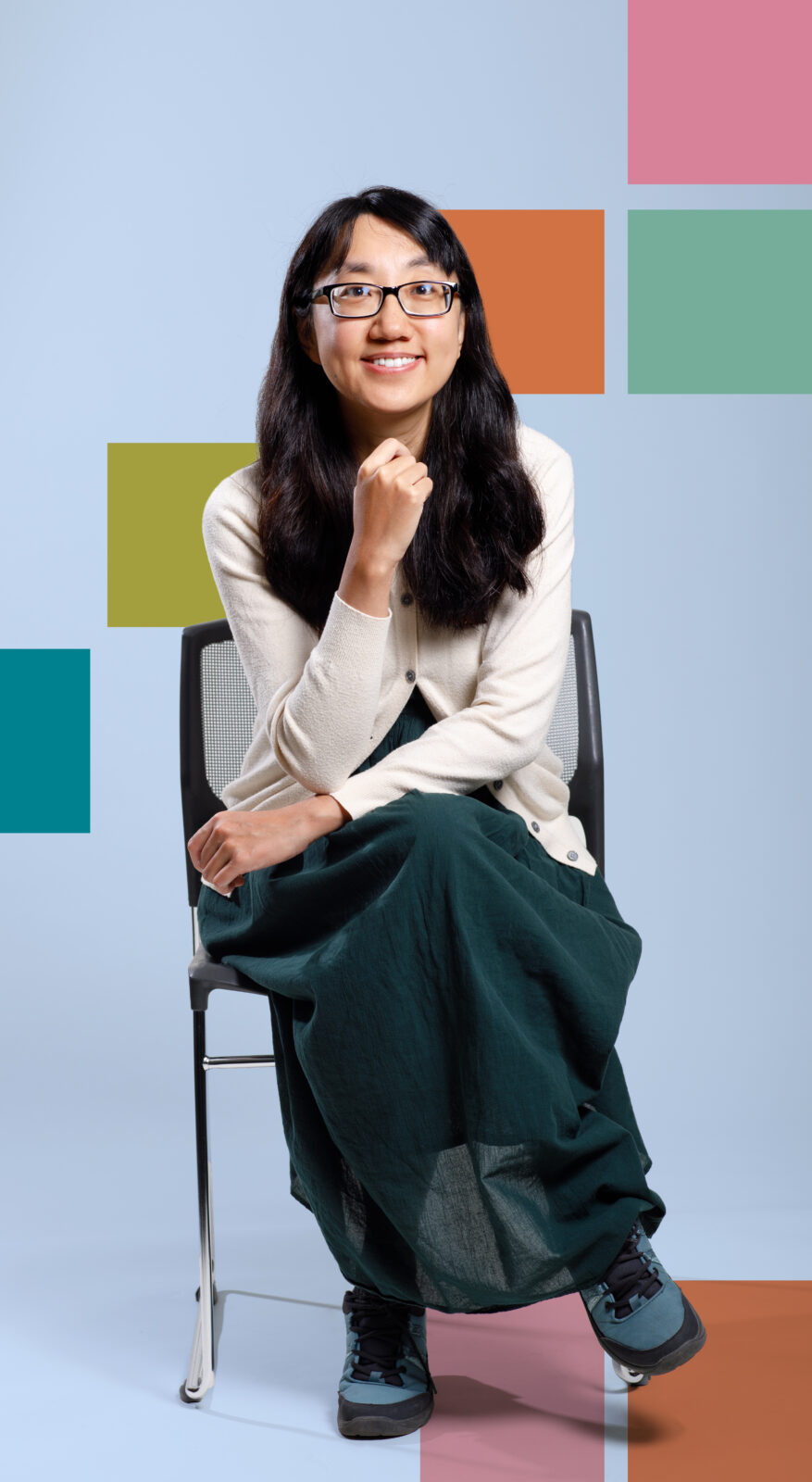
“We were motivated to study this because we’ve observed students using AI — we’ve seen how they are early adopters,” Liu says.
Liu and Glave surveyed and interviewed students at two Midwestern universities. They hoped to learn how use of and attitudes about AI vary across sociodemographic groups. They found students who are the first in their family to go to college are more likely than their peers to use AI to support their schoolwork. Those students often use the tool as a “24/7 teaching assistant,” Liu explains.
Glave says discovering students’ motivations for turning to AI — things like overcoming a language barrier or finding a way to get information when an instructor is inaccessible — sheds light on where campuses could place more in-person resources.
“We hope the research can inform how institutions support students,” Glave says.
Down the hall from Liu and Glave, Assistant Professor Taylor Odle studies the implementation of programs that support students — and thousands of young Wisconsinites are benefitting from his work.
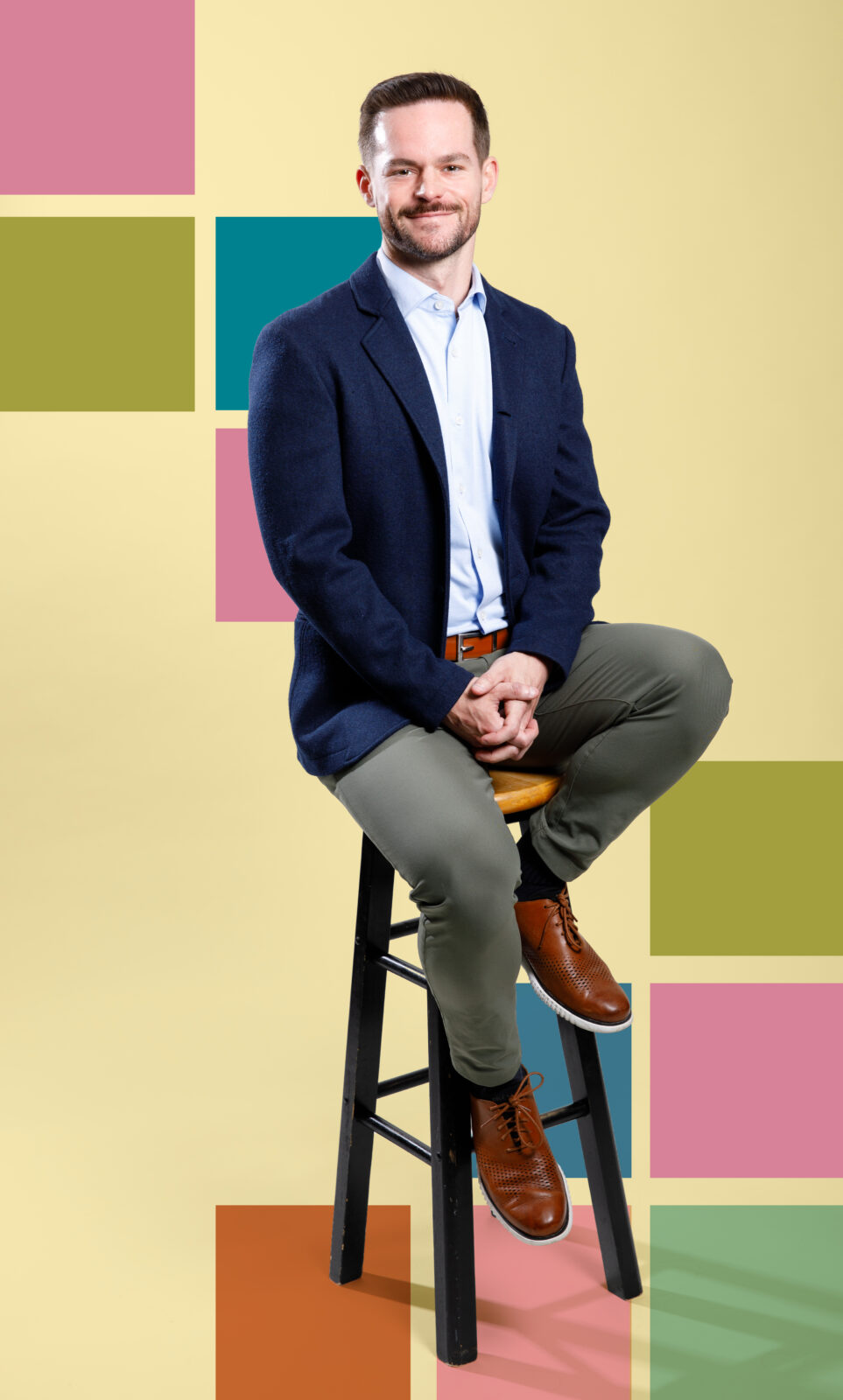
Odle researches how admission and financial aid programs affect students in higher education. At the same time, he’s advising UW–Madison and the Universities of Wisconsin on implementing some of those programs.
“It’s very special to be in a place to have my service align with my experience and expertise,” Odle
says. “I feel very plugged into the university, and I feel a shared responsibility to do this work.”
In 2022, shortly after arriving at UW–Madison, Odle presented his expertise on direct admissions — a practice that allows some high school graduates automatic admission to colleges and universities — to the Board of Regents of the Universities of Wisconsin. In 2023, Direct Admit Wisconsin launched for several Universities of Wisconsin campuses. Last year, 34,000 high school seniors across Wisconsin received admission offers from the Universities of Wisconsin because of the program.
Meanwhile, Assistant Professor David O’Brien is helping current UW–Madison students engage in meaningful conversations about controversial issues.
A philosopher of education, O’Brien applies his expertise as part of the team that writes curriculum and facilitates campus Deliberation Dinners, which provide structured opportunities for students to build relationships and have conversations about polarizing political subjects. This year, the conversations addressed gun regulation, abortion access, and educational vouchers.
O’Brien’s scholarly background ensures he’s well-equipped to help students navigate these challenging subjects. As a researcher, he has focused on ethics, educational justice, and political philosophy. He teaches courses on egalitarianism and educational justice, and philosophy of moral education.
O’Brien says his work with the Deliberation Dinners aims to help students learn how to give reasons to others and listen to the reasons that others give to them.
“Like any other skills, articulating your own reasons and understanding others’ reasons can be developed through well-structured practice,” O’Brien says. “Philosophy can help to set the stage for practicing those skills, because it can help to clarify the arguments on each side of issues about which there’s real, and reasonable, disagreement.”
Reaching out – Connecting with communities
For many scholars and students in the department, learning is powered by meaningful community engagement off campus.
“In educational policy studies, we help students develop a critical understanding of education’s place in the world,” says Erica Turner, associate professor in the department.
Earlier this year, 29 students in Turner’s “Introduction to Education Policy” course connected with a Wisconsin advocacy organization, the Healthy School Meals for All Wisconsin (HSM4A WI) Coalition, to learn about and support the group’s push for no-cost school breakfast and lunch for all K-12 students in Wisconsin. Working with the organization, students created an advocacy toolkit for audiences including students, parents, and education leaders.
Turner says the connection helped students gain “real-world” experience and make classroom concepts come alive.
Oluwadara Fadiran, a student in the course, says the experience was empowering.
“It was really interesting to apply everything I learned into an actual, tangible product for a cause I really care about,” Fadiran says. “I want to be an educator in the future, but I’m also incredibly passionate about improving education on a bigger scale, and this project taught me how to do a little bit of both in a real, local context.”
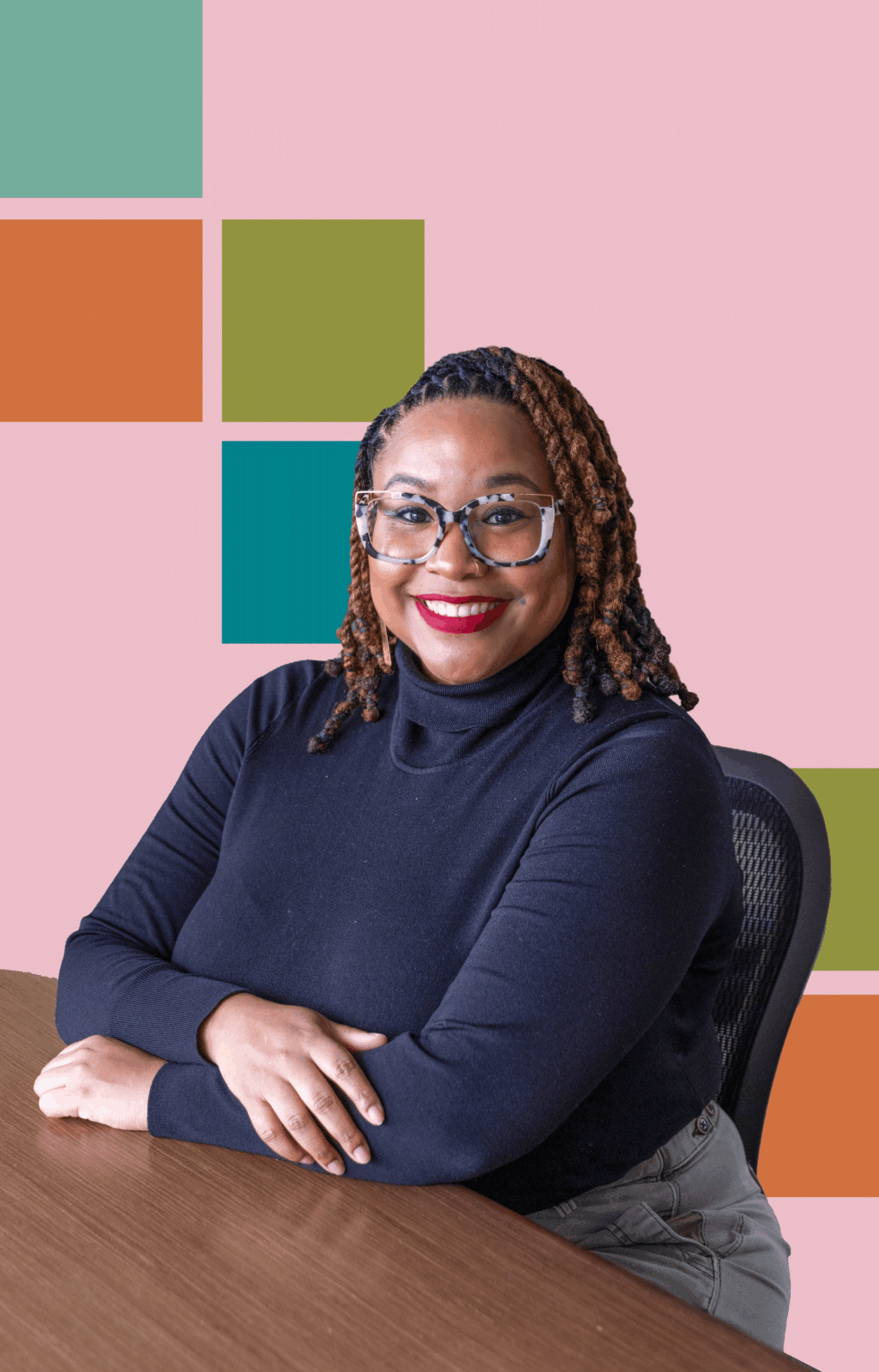
This past fall, Assistant Professor Naomi Mae W. developed and taught a course that connected upper-level undergraduate and graduate-level students with Rocky Knoll Health Care Center, a skilled nursing facility in east-central Wisconsin. Mae says her goal was to provide students with hands-on experience engaging with a community on a research question. In this case, Rocky Knoll was seeking support to develop a curriculum for its intergenerational programming.
Student Kayla Sippl says Mae’s course helped her understand the nuances and difficulties of community-based work.
“This felt extremely important, as it can be easy in a classroom setting to focus on the ideals of community-engaged work while ignoring the realities that often get in the way,” she says.
Mae says she hopes to bring this spirit of mutual learning and meaningful community engagement to additional courses.
“I built this course around the idea that we could fulfill what the community needed, and I could fulfill what the students need to learn,” she says. “It’s an honor to put this into practice.”
Widening the reach – National and global impact
The department’s work also reaches across the country and around the world.
For Assistant Professor Rachel Elizabeth Williams and Associate Professor Walter Stern, the focus is the American South.
Williams’ interdisciplinary research brings together Black studies and critical geography with education policy to examine race, place, and political economy in the U.S. metropolitan South. One of her current projects, an extension of her award-winning dissertation, examines a state-backed charter school growth plan in Tennessee.
Williams says her examination of the initiative is not simply focused on whether the changes “work” for improving school performance. Instead, she explores the political dynamics at play during such changes, as well as the relationship between charter schools and city development.
“I’m looking into how a state takeover of a traditional public school district in a majority Black town in a conservative, predominantly white state creates tensions and has potential implications for our democracy,” she explains. “These initiatives strongly relate to issues like new modes of segregation, such as county secession, and how charter schools can reshape majority Black cities surrounded by majority white suburbs.”
Those themes are also prominent in Stern’s work.
Stern looks at intersections among racism, state action, and ordinary people’s lives in the 19th- and 20th-century United States, with a focus on public schools and the metropolitan South. The courses he teaches in the department include “History of Race and Inequality in Urban America” and “History of American Education.”
Stern’s current book project centers on the case of Gary Tyler, a Black teenager who was imprisoned for nearly 42 years after being wrongfully convicted of fatally shooting a white student at their desegregating Louisiana high school in 1974. Stern received a National Endowment for the Humanities award to support the project.
For other early- and mid-career faculty in the department, the work is global.
Diana Rodríguez-Gómez, an assistant professor, and Elena Aydarova, an associate professor, ask questions that reach into communities around the world.
Rodríguez-Gómez examines statebuilding and education policy-making processes in areas affected by violence, particularly in Latin America. One of her current research projects looks at how illicit and licit coca markets affect schools and students in Colombia. Her upcoming book, “Community, Insurgency and the State: Crafting School Governance in Colombia’s Armed Conflict,” examines what happens when educators are expected to enforce not only state but also guerrilla demands — all while keeping their schools running.
Rodríguez-Gómez has also co-led one of the department’s study abroad programs to Colombia, where students learned how human rights are exercised, negotiated, and contested in the country’s educational system. She says facilitating students’ engagement with global issues helps them recognize how communities are connected through processes that both shape and are shaped by education.
“Whether we are discussing child labor, forced migration, or the war on drugs, I encourage students to see these issues not as distant problems affecting ‘others,’ but as interconnected realities that link their lives to communities across national borders,” she says.
Aydarova has dedicated her recent research to shedding light on how conservative and far-right networks are shaping education policy.
Her forthcoming book, “Manufactured Outrage: The Conservative Industrial Complex’s War on Education and How to Fight Back,” focuses on conservative groups’ recent pushes to change policies on things like teaching about race and racism, as well as diversity, equity, and inclusion initiatives. Though this book focuses on action in the United States, she is working on mapping conservative policy influencers’ global coalitions and funding sources.
Examining such contentious issues is “heavy and hard,” Aydarova says. But she also points out that documenting how citizens have coalesced to push back on policies they oppose is inherently hopeful.
“That’s where democracy lives — in the living room or the public library where people get together and say, ‘This isn’t right,’” she says. “That’s my space of hope.”
The work ahead
The work of the Department of Educational Policy Studies is broad, and that breadth is one of its greatest strengths. It provides new additions to the department — the faculty who are building careers steeped in meaning and engagement — the reassurance that wherever they go in their scholarship, a strong foundation is beneath them.
“We are proud to welcome and nurture the continued growth of these exceptional researchers and educators,” says Kendall. “Our collective mission to support socially just education is reflected in the breadth and depth of our department’s research, teaching, and outreach, which we encourage everyone to explore.”
Our classes are rooted in instructors’ expertise and research relationships, and their passion for transformative education
Kendall points out the department offers courses that fulfill every general education requirement at UW–Madison as well as experiential and hands-on learning opportunities, study abroad programs, internships, student-led research, community partnerships, First-Year Interest Groups (FIGs), and many other opportunities for critical engagement and deep learning.
“Our classes are rooted in instructors’ expertise and research relationships, and their passion for transformative education,” she says.
And the building continues.

Research Around the World
While the work of early- and mid-career scholars in the Department of Educational Policy Studies is charting exciting new territory, the department’s later-career professors have set a standard of excellence that spans the globe:

Lesley Bartlett, Professor
United States, Brazil, Tanzania
Bartlett’s research includes a look at how changes to diversity, equity, and inclusion programs have affected K-12 schools in the United States. She has also studied early grade reading policy and practice in Tanzania and how conservative alliances shape education policy in Brazil. Bartlett was recently recognized with a Vilas Distinguished Achievement Professorship.
Douglas Ready, Professor
United States (New York)
One of Ready’s recent projects leverages 40 years of quantitative data to explore the role of private schools in overall New York City school segregation, with a focus on how NYC’s demographic shifts have influenced segregation patterns within and between school sectors. He is also conducting a study on New York City’s major English/language arts and mathematics reform initiatives, involving almost 600,000 students and 800 schools.
Amy Claessens, Professor
United States (Wisconsin, Oklahoma)
Claessens leads a partnership with the Wisconsin Department of Children and Families to examine a drastic decline in the number of regulated family child care providers operating in the state in the past 15 years. She is currently examining turnover in the child care workforce in Wisconsin. She has also collaborated on a study examining how Tulsa’s early childhood education programs affected high school outcomes for students.
Adam Nelson, Professor
United States
Nelson specializes in the history of higher education. He has authored numerous books, including the recent “Exchange of Ideas: The Economy of Higher Education in Early America” and “Capital of Mind: The Idea of a Modern American University.” The books examine the beginnings of American higher education from the late colonial period through the war for national independence and into the early 19th century. The books aim to show how early Americans defined the purposes of higher education during a period of profound social change — and how they planned to pay for it.
Stacey Lee, Professor
United States
Lee’s primary strand of research focuses on education and the racialization of Asian American youth. Her current work includes a research project funded by the National Science Foundation that investigates the STEM college experiences of Hmong students. She is also writing a book on the educational experiences of Chinese Americans who grew up in the Mississippi Delta during late Jim Crow. Lee was recently elected to the National Academy of Education in recognition of stellar scholarly contributions throughout her career.
Nancy Kendall, Professor
United States, Colombia, India, Malawi
Kendall’s research examines how people and communities marginalized within national and global systems experience schooling in an era of polycrisis, and works with communities to improve collective well-being. Recent projects include Circle of Care, an innovative participatory action research effort to foster the well-being of orphans, grandmother headed households, and AIDS-affected schools and communities in Machinga District, Malawi, and Understanding Marginalized Youth’s Secondary School Experiences — a Spencer Large Grant-funded, mixed methods project in Colombia, India, and Malawi.
William Reese, Professor
United States (Washington, D.C.)
Reese specializes in the history of American and European education and is a member of the National Academy of Education. He is the author of a forthcoming biography, “The Calculating Boy: Zerah Colburn, America’s First Child Celebrity,” which will be published by Johns Hopkins University Press in the spring of 2027. He is also researching how federal policies have shaped governance, academic standards, and race relations in Washington, D.C., since the 19th century, among other projects.
Simone Schweber, Professor
United States
Schweber’s research includes a focus on how people teach and learn about the Holocaust and genocide in both formal educational realms (like schools) and informal educational spaces (like museums and experiential trips). Her broad range of research projects includes how the Holocaust is taught to young children, how the Holocaust is taught in religious schools, how it is presented to public high school students, and how it appears in popular culture.