Linking Motion and Emotion
A Q&A with Jacob Meyer
By Laurel White
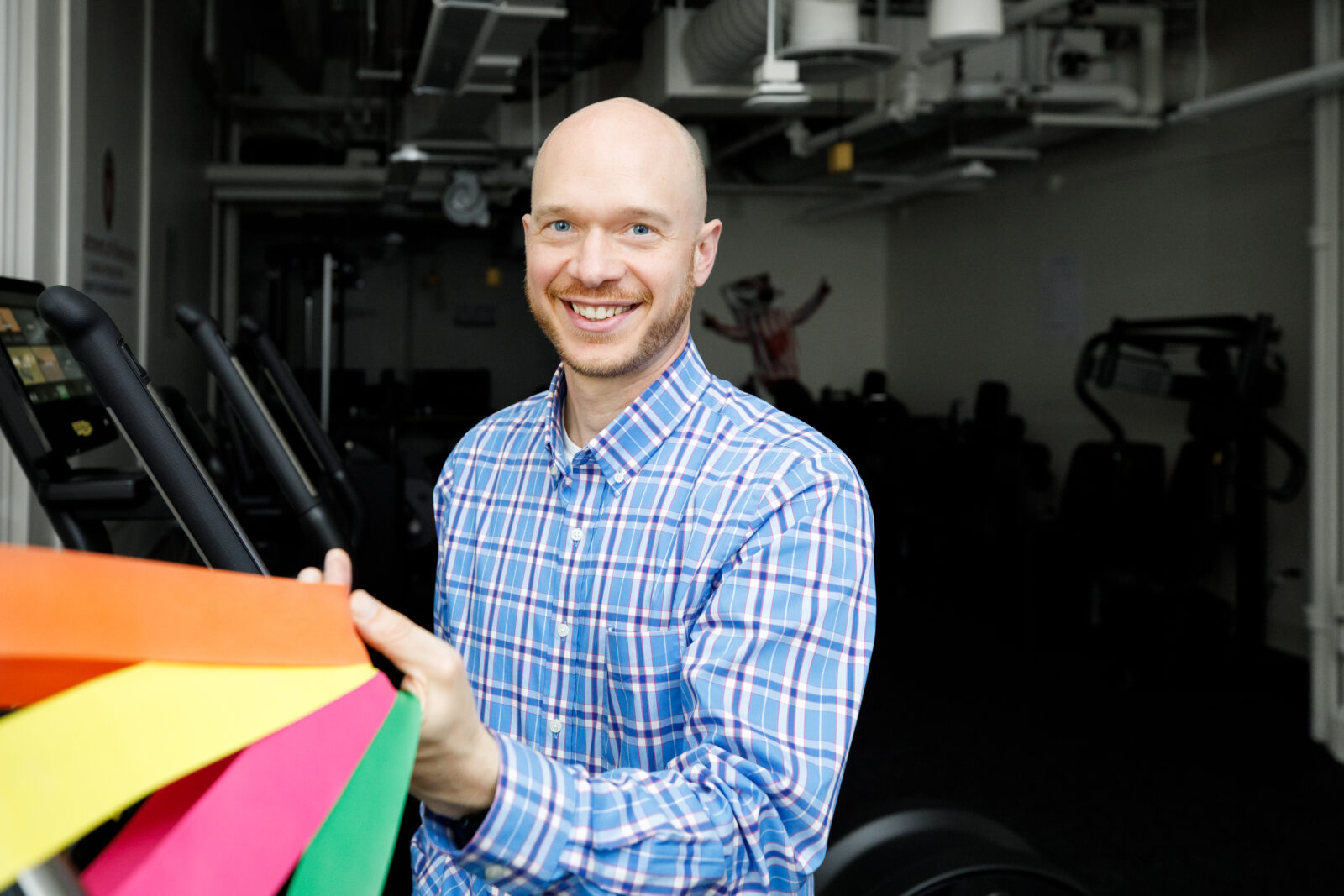
Kinesiology faculty member Jacob Meyer studies how movement can improve mental health — and how exercise might not just support well-being, but strengthen mental health treatment.
Meyer, an assistant professor, received his master’s and doctoral degrees from the School of Education’s Department of Kinesiology in 2011 and 2015, and returned to join the faculty in 2024. He says coming back to campus has helped him tap into the well of excitement and enthusiasm he felt for his work as a student.
“You keep reaching for the stars because it’s what brought you here in the first place,” he says. “It’s a renewal.”
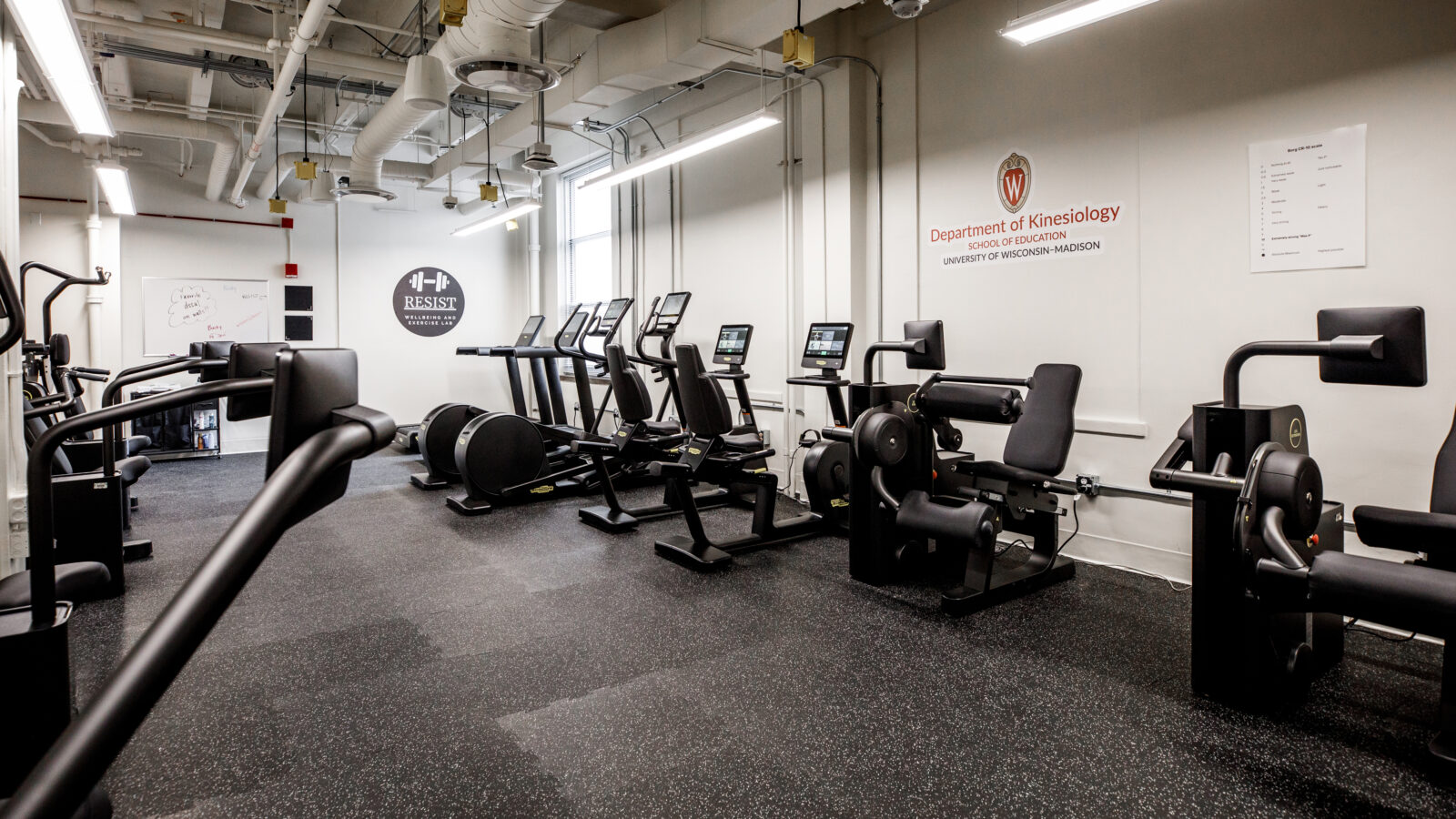
Meyer is currently leading two National Institutes of Health (NIH)-funded studies on how exercise can support mental health care. One study is examining whether resistance training can reduce symptoms of depression. The other is testing whether exercise immediately before a session of cognitive behavioral therapy can strengthen therapeutic engagement and improve key treatment processes such as patient motivation and the patient-therapist bond. He is partnering with kinesiology faculty member Jill Barnes on one project, and counseling psychology faculty member Simon Goldberg on both.
The potential impact of the work is immense, with millions of people around the world (and roughly 8% of adults in the United States, according to the NIH) struggling with depression.
“These studies could lay the foundation for new treatments that could reduce the widespread, substantial burden of mood disorders and serious mental illnesses,” Meyer says. “It’s very exciting work.”
What drew you to studying the connection between movement and mental health?
I’ve always been interested in neuroscience and the brain, and over time that crystallized into a focus on mental health. I’ve also gone through periods in my life when mental health became more difficult, and during those periods I noticed I wasn’t as active. As things resolved over time for me, I wondered if there’s something about moving and mental health that’s linked — is it just me? Or maybe it’s humanity? And if that’s the case, then let’s do something about it.
In your research, how do you know if someone is exercising because they’re feeling better, or feeling better because they’re exercising?
That’s one of the central questions of the field. You have to have a really hard question to want to answer it — it’s the hard questions that stick with you. We’re asking when exercise is helping, for whom, and through which pathways. We’re also asking how to help the people who would benefit most from exercise, and how to design approaches people will actually use.
What do you wish more people understood about the field of kinesiology?
I wish more people understood the impact that human movement has on everything: human health, work, social relationships … all of the ways we function can be influenced by how we’re moving. The field is thinking about human health all the time, but through the lens of behavior. I think lots of people think about exercise science or kinesiology as sports, but the percentage of work in the field that is sports-related is not actually that high. The breadth and depth of kinesiology is surprising to people.
You’re hoping to help people tackle a very formidable foe: depression. What kind of feedback do you get from study participants whose lives have been improved by your work?
The things people say to us are incredible. It’s humbling that we get to be a part of people’s lives in a way that’s meaningful. I like to think we’re trying our best to help — that’s what drove me to pursue this work — and I hope we can continue to be helpful moving forward, figuring out the best ways to make exercise “stick” for more people and improving the tools and support we can offer to help them succeed.
What are your hopes for your research a decade from now?
Broadly, I hope conversations about how to improve and magnify the good things that happen in health care include even more voices from the field of kinesiology. I hope exercise is taken even more seriously as part of mental health care — not just as something that is “good for you,” but as an evidence-based tool that can strengthen treatment and improve lives. And I hope we can create a name and a gravity around UW — that the institution is recognized as part of those conversations, including conversations about mental health treatment, prevention, and public health recommendations, and as a place that is shaping the future of mental health and movement. This fall, our campus will be hosting a national conference on these subjects. We’re starting to make it clear that UW pulls together people who think about this on a global stage. The seeds are planted — now we just have to water them.